
Toilet Repair • Bowie, MD
Toilet Supply Line & Shut-Off Valve Replacement in Bowie, MD
The supply line carries water from the wall to the toilet tank, and the shut-off valve behind the toilet controls that water. This service covers a supply line that drips, a shut-off valve that leaks, will not turn, or will not fully stop the water, and a connection that has started to corrode.
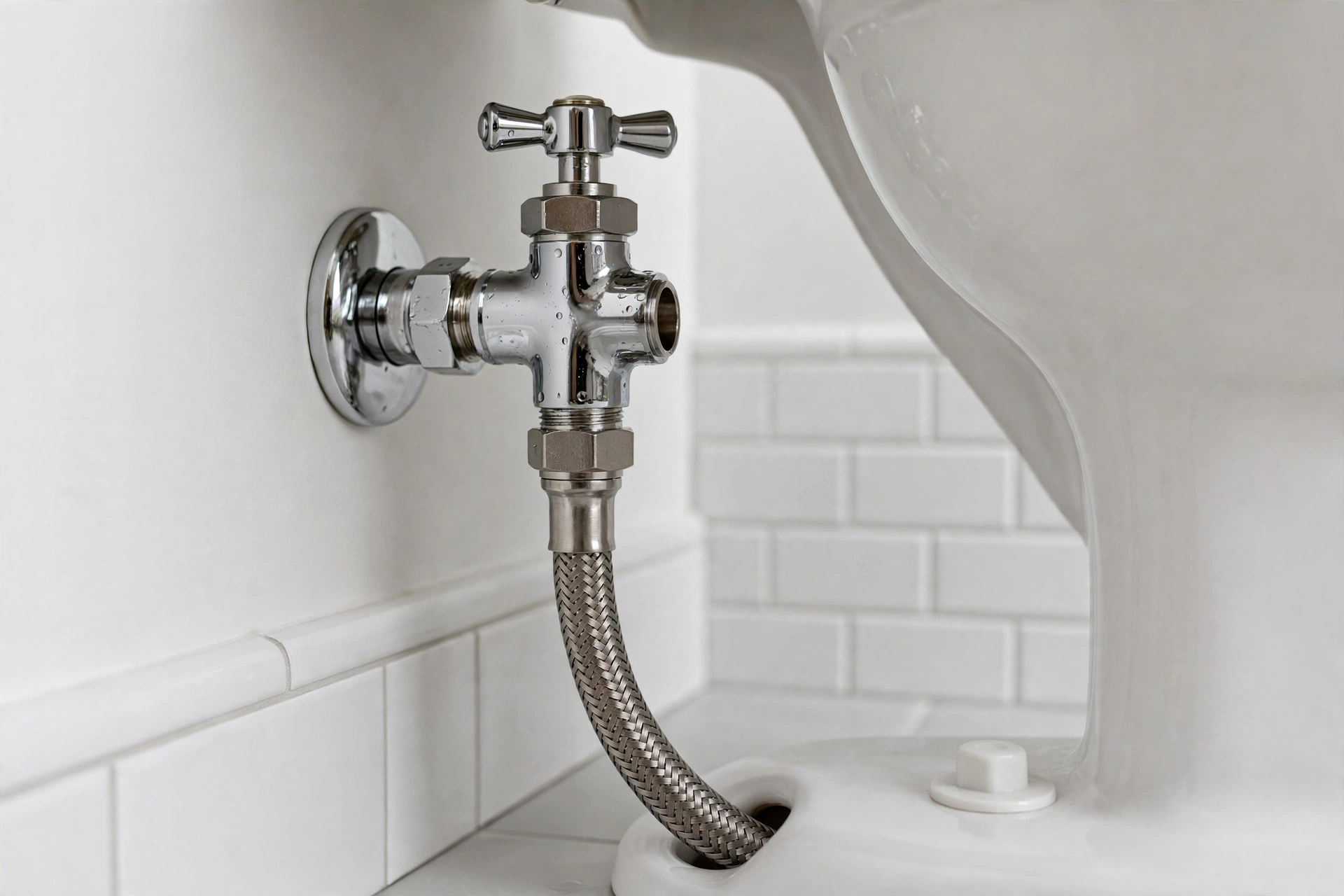
What Supply Line & Shut-Off Valve Replacement Is
The supply line carries water from the wall to the toilet tank, and the shut-off valve behind the toilet controls that water. This service covers a supply line that drips, a shut-off valve that leaks, will not turn, or will not fully stop the water, and a connection that has started to corrode.
Supply lines and shut-off valves fail with age, corrosion, or mineral buildup. A valve that has not been turned in years may stick, drip when finally turned, or refuse to close fully. Even a slow drip matters: it can stain the floor, damage the baseboard, and keep the area behind the toilet damp.
Benefits of Supply Line & Shut-Off Valve Replacement
Replacing a failing valve or line has a few clear advantages, especially in an emergency.
- Stop the drip at its source. Replacing the failing part ends a drip that can damage flooring over time.
- A valve that works in an emergency. A working shut-off valve is how you stop the water quickly if the toilet overflows or the tank overfills.
- Catch the second drip early. The provider checks the tank connection at the same time, so a second drip does not appear days later.
- Know before an emergency. Many people discover a bad valve during an overflow; replacing it now means it works when it matters.
What to Expect During Supply Line & Shut-Off Valve Replacement
Every visit is different, because every toilet problem is different. Here is the usual sequence when you call about this service.
- You call and describe the problem. Tell us whether water is dripping from the valve, the line, or a connection, and whether the valve will turn.
- We connect you. We connect you with an independent local provider who may be able to help with this type of problem.
- Provider inspects in person. The provider shuts off water as needed and inspects the valve, line, and connections.
- You approve the work. The provider explains what they find and any cost involved. Work proceeds only with your approval. The provider performs the work and sets any pricing. After fitting the new parts, the provider turns the water back on slowly and checks every connection for drips.
- After the visit. Check behind the toilet for drips over the next few days. If dampness or a drip returns, call back and say which connection is wet.
What's Included in Supply Line & Shut-Off Valve Replacement
A visit for supply line and shut-off valve replacement may cover:
- Shutting off water to the bathroom or home if the toilet valve will not close
- Inspecting the valve, supply line, and both connections — at the wall and at the tank
- Replacing the supply line, the shut-off valve, or both, as needed
- Turning the water back on slowly and checking every connection for drips
Common Problems Solved by Supply Line & Shut-Off Valve Replacement
These are the problems callers most often describe for this service, and the sensible next step for each.
- Problem: Water dripping from the valve or supply line behind the toilet. Next step: Note whether the drip is steady or only after flushing, and call.
- Problem: A shut-off valve that will not turn or will not fully stop the water. Next step: Call and say the valve will not close — do not force it, since forcing can damage it further.
- Problem: Corrosion, green or white buildup, or rust on the valve or line, or a damp wall, floor, or baseboard behind the toilet. Next step: Call and describe the buildup and dampness — both point to a failing connection.
When to Use Supply Line & Shut-Off Valve Replacement
Not every toilet problem needs the same response. These are the situations where this service is the right call.
- Situation: A drip appears after a toilet is moved or a tank part is replaced. Next step: Call and say when the drip started. Outcome: The provider checks the connections that were disturbed and replaces what has failed.
- Situation: The valve has not been turned in years and now sticks. Next step: Call and ask for the valve to be checked — do not force it. Outcome: The provider replaces the valve so it works when needed.
- Situation: Water is actively spraying or spreading behind the toilet. Next step: Shut off water to the bathroom or home if you can do so safely, keep clear of electrical items, and call. Outcome: The provider stops the water and replaces the failed part.
Tools and Methods for Supply Line & Shut-Off Valve Replacement
The repair may involve a new braided supply line, a new shut-off valve, and basic hand tools for fitting the connections. The provider turns the water back on slowly after fitting the parts and checks each connection for drips. Which parts are replaced depends on what the inspection finds.
Local Considerations in Bowie, MD
Supply line and shut-off valve replacement is available across Bowie, MD — ZIPs 20715, 20716, 20720, and 20721 — including Whitehall, which borders the Bowie Golf Club. Callers anywhere in Bowie can call the same number.
Cost Factors
There is no single fixed price for this repair. Cost factors depend on whether the supply line, the valve, or both need replacing, what type of valve and line your bathroom has, and how accessible the connections are. A supply-line swap and a valve replacement are different jobs. The provider can explain the cost factors for your situation before work begins. Toilet Fix Pros does not set provider pricing.
Frequently Asked Questions
Why won't my toilet shut-off valve turn?
Valves that have not been used in years can stick or corrode. Forcing a stuck valve can break it and cause a leak, so it is best to let a provider handle it.
Can I just tighten a dripping supply line?
A small drip at a connection sometimes comes from a loose fitting, but it can also come from a worn washer, a cracked line, or a corroded valve. A provider can tell which one it is and replace the failed part.
Should the valve be replaced when the toilet is replaced?
Often, yes — especially if the valve is old, stiff, or corroded. Replacing it during a toilet swap avoids a second visit and leaves you with a valve that works.
What if the valve won't stop the water?
Tell us when you call. A valve that will not fully close is itself a problem, and the provider may need to shut off water elsewhere to work safely.
Need toilet repair in Bowie?
Call Toilet Fix Pros and we will connect you with an independent local provider who may be able to help.
Call to check current availability.