
Toilet Fix Pros Blog • October 2026
Common Causes of Toilet Problems in Bowie
Most toilet trouble in a Bowie home comes down to a handful of parts wearing out: the flapper, the fill valve, the wax ring, the flange, the supply line and shut-off valve, and the trap and drain. Age, mineral buildup, and a toilet that moves all wear them out faster. Once you know which part usually causes which symptom — a running toilet, a leak at the base, a weak flush — describing the problem gets a lot easier, and so does getting it fixed.
A toilet looks complicated from the outside, but there are only a few places a problem can start: the tank, the base, the supply line, or the drain. Each spot has its own typical failure, and each failure has its own signs. Here are the causes that show up most often in Bowie homes, from tank parts down to floor seals.
Worn Flapper
The flapper is the rubber seal at the bottom of the tank that holds water back until you flush. Over time the rubber hardens, warps, or gets coated, and the seal no longer closes fully. Water slips from the tank into the bowl, the tank refills on its own, and the toilet seems to flush by itself — ghost flushing, or a phantom flush. A worn flapper is one of the most common reasons a toilet runs, and a provider can check it by inspecting the tank and the flush valve seat it rests on.
Faulty Fill Valve
The fill valve refills the tank after a flush and shuts off when the water reaches the right level. When it wears out, it may fill slowly, fail to shut off, hiss, or let the water level climb too high. A high water level sends water down the overflow tube and keeps the toilet running. A sticking fill valve can also make the tank fill in fits and starts. Fill valves wear with age and use, and mineral buildup on the valve makes the problem worse.
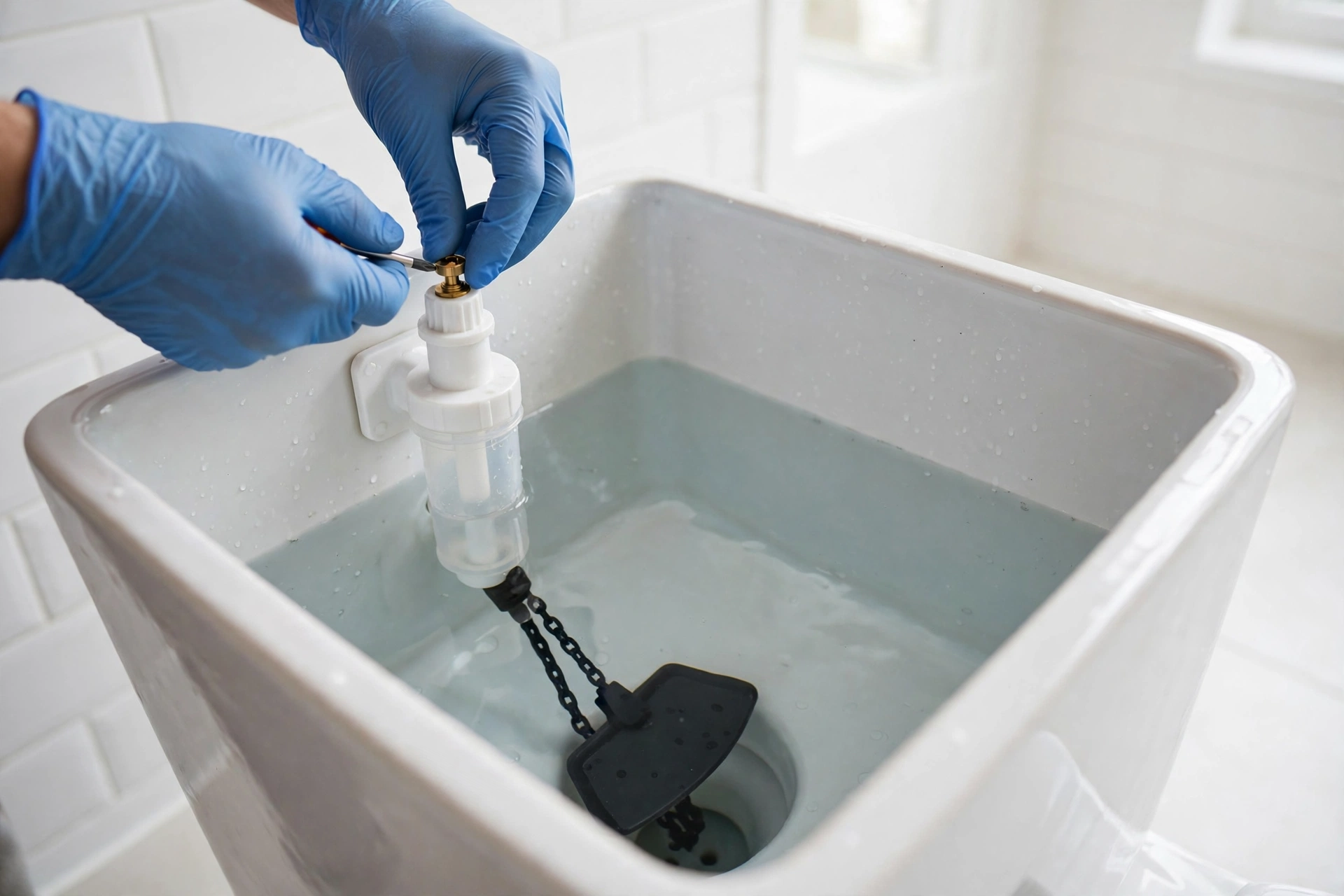
Tank parts — flapper, fill valve, flush valve — are behind most running toilets.
Wax Ring Failure
The wax ring is the seal between the bottom of the toilet and the drain in the floor. It is hidden from view, so it is easy to forget about. When it loses its shape, flush water escapes at the base instead of going down the drain. The signs are water at the base after flushing, a musty smell, and a toilet that rocks. Wax rings fail with age, and they can also fail when a toilet moves, when the flange underneath is damaged, or when the floor under the toilet softens.
Flange Problems
The flange — also called the closet flange — is the ring that connects the toilet to the drain pipe and anchors the toilet to the floor. If it cracks, corrodes, or sits at the wrong height, even a brand-new wax ring may not seal. The symptoms overlap with wax ring failure: base leaks, rocking, and sewer odor. Because the flange sits under the toilet, a provider usually has to lift the toilet to inspect it. Flange trouble is more involved than a tank-part repair, and it is a common reason a base leak keeps coming back after a first fix.
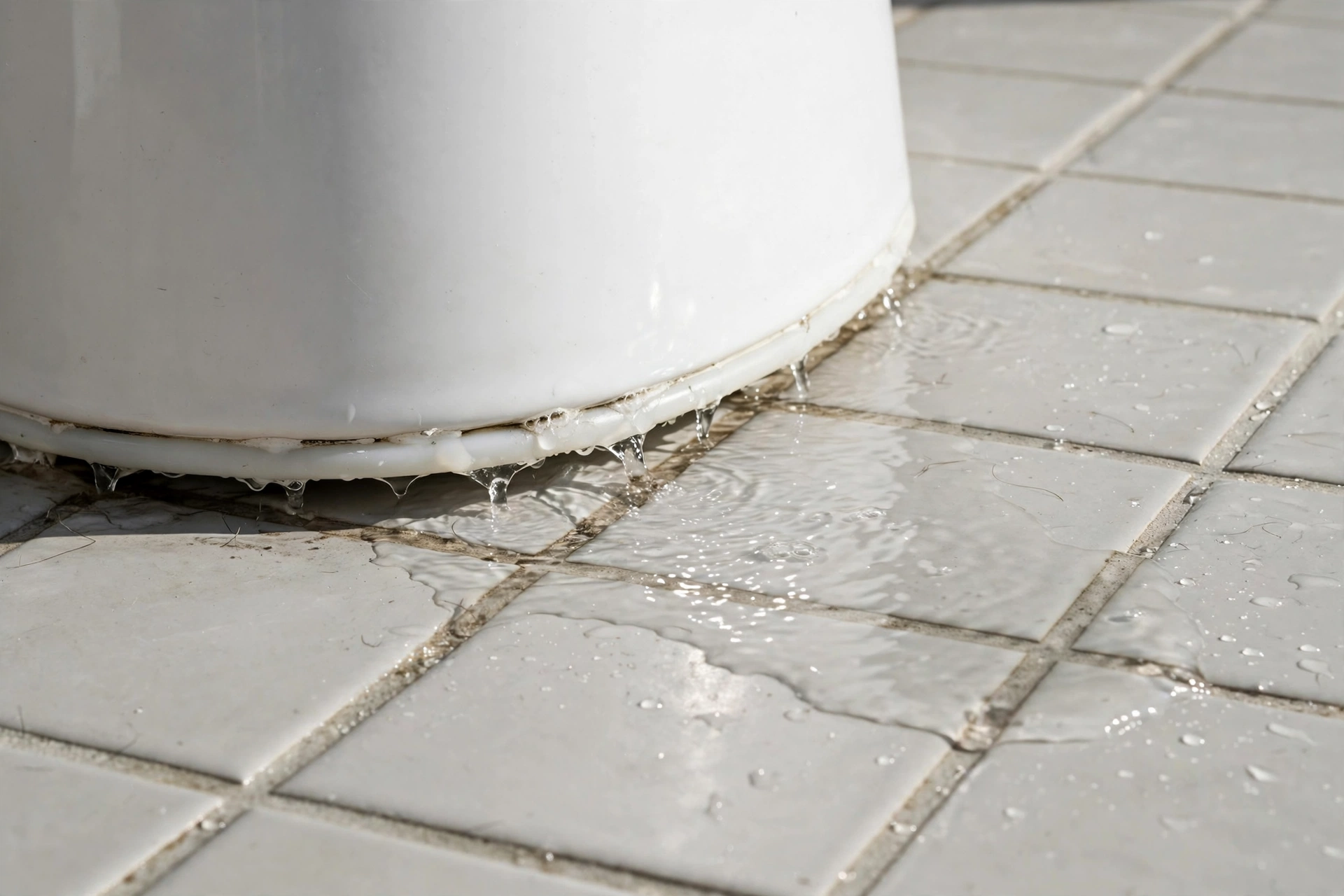
Water at the base after flushing often points to the wax ring or the flange.
Clogs in the Trap or Drain
Clogs form in the toilet trap, the curved passage inside the toilet, or farther down the drain line. Too much paper, wipes that do not break down, and objects dropped into the bowl are the usual causes. A clog may show up as a slow flush, a bowl that fills too high, or a toilet that backs up when another fixture drains. A clog that keeps returning after clearing can point to a partial blockage, an object still sitting in the trap, or a problem farther down the line that needs a closer look.
Supply Line and Shut-Off Valve Wear
The supply line carries water from the wall to the toilet tank, and the shut-off valve behind the toilet controls that flow. Connections can loosen, washers can wear, and flexible lines can weaken with age. The signs are a drip behind the toilet, a damp wall or floor near the valve, or a valve that sticks and will not fully stop the water. Supply-line drips are easy to miss because they can be slow — but a small drip can damage flooring over time, so it is worth mentioning when you call.
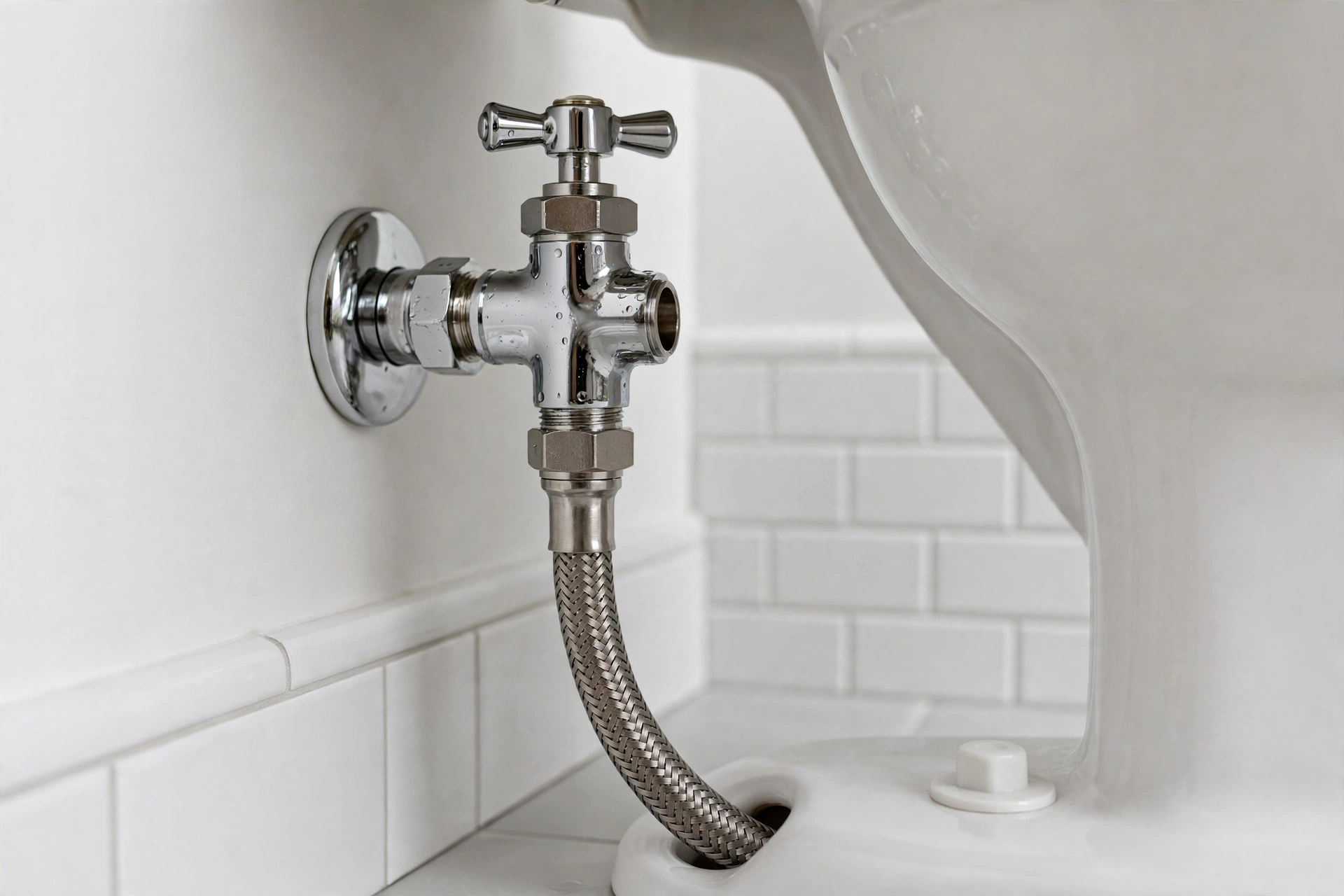
The supply line and shut-off valve behind the toilet can drip slowly for a long time before anyone notices.
Age of the Fixture
Toilets themselves can last a long time, but their internal parts wear out much sooner. Flappers, fill valves, and seals are consumable parts that need replacing from time to time. Older toilets may also flush weakly because of rim buildup under the bowl rim, or a worn flapper that closes too early and cuts the flush short. When the same toilet keeps failing after repairs, or when the bowl or tank is cracked, a provider may suggest replacement instead of another repair. The right call depends on the condition of the fixture, which only an in-person inspection can confirm.
Hard-Water Mineral Buildup
Mineral deposits build up on valve seats, inside the rim holes under the bowl, and on seals. The result can be a weak flush, a flapper that will not seal, or a fill valve that sticks. Buildup is one of the things a provider checks when a tank part keeps failing or a flush keeps getting weaker, because a fresh part will not last long if the seat it rests on is still coated. Regular attention to tank parts helps, and a provider can advise on what they find in your toilet.
How Problems Show Up Together
Toilet problems rarely arrive one at a time in an older fixture. A rocking toilet can break a wax ring. A failed wax ring can let water soften the floor, which makes the rocking worse. A worn flapper and a sticking fill valve can both cause running at the same time. That is why describing every symptom you see — running, rocking, leaking, weak flushing, clogging — helps the provider understand the full picture instead of fixing only the most obvious part.
What to Tell the Provider
- What the toilet is doing: running, leaking, clogging, rocking, weak flush, or a mix
- When it started and whether it is getting worse
- Whether water is on the floor, and where
- Whether the problem affects one toilet or more than one
- What you have already tried, if anything
When you call Toilet Fix Pros, we connect you with an independent local provider who checks the toilet in person, explains what they find, and carries out the work you approve. The provider performs the work and sets any pricing.
Frequently Asked Questions
Why does my toilet keep clogging?
A repeat clog can come from a partial blockage, an object in the trap, or a problem farther down the drain line. A provider can check the trap and drain to find the cause instead of clearing the same clog again.
Do I need a new toilet or just a repair?
Most toilet problems are repairs: a tank part, a wax ring, a supply line, or a flange. Replacement usually makes sense when the bowl or tank is cracked, when the same toilet keeps failing after repairs, or when you want a different height or style.
Why does my toilet run even though the flapper looks fine?
A flapper can look fine and still leak if the valve seat is coated or the water level is too high. A fill valve that will not shut off can cause the same symptom. A provider can check both parts in the tank.
Need toilet repair in Bowie?
Call Toilet Fix Pros and we will connect you with an independent local provider who may be able to help.
Call to check current availability.