
Toilet Fix Pros Blog • October 2026
Toilet Running vs. Leaking: What Is the Difference?
A toilet that runs and a toilet that leaks are two different problems, even though both waste water. A running toilet keeps moving water inside the fixture — the tank refills on its own, the fill valve hisses, or the handle needs a jiggle to quiet down. A leaking toilet lets water escape outside the fixture, onto the bathroom floor, around the toilet base, or down into the room below. Knowing which one you have matters, because each points to a different part of the toilet: tank parts like the flapper and fill valve on one side, seals and connections like the wax ring, flange, and supply line on the other.
People mix the two up all the time, and no wonder. Both mean water going where it should not. Both can push up a water bill. Both can start quietly and get worse over a few weeks. A toilet can even have both problems at once — a worn tank part and a failing seal in the same fixture. Sorting out what you are actually seeing is the first step, because it tells the provider where to look first.
What a Running Toilet Looks Like
A running toilet sounds busy when nobody has touched it. You hear water hissing or trickling into the bowl, the tank refills by itself every few minutes, or the toilet seems to flush on its own in the middle of the night — what people call ghost flushing or a phantom flush. The floor stays dry, because the water is still going down the drain. That is the giveaway: noise and refilling, no water on the floor.
The cause is usually inside the tank. A worn flapper no longer seals against the flush valve seat, so tank water slips into the bowl. A fill valve that will not shut off keeps water coming in, and the extra water drains away through the overflow tube. A water level set too high does the same thing. Mineral buildup on the valve seat can keep an otherwise good flapper from sealing. These are small, hard-working parts, and they wear out with age and use.
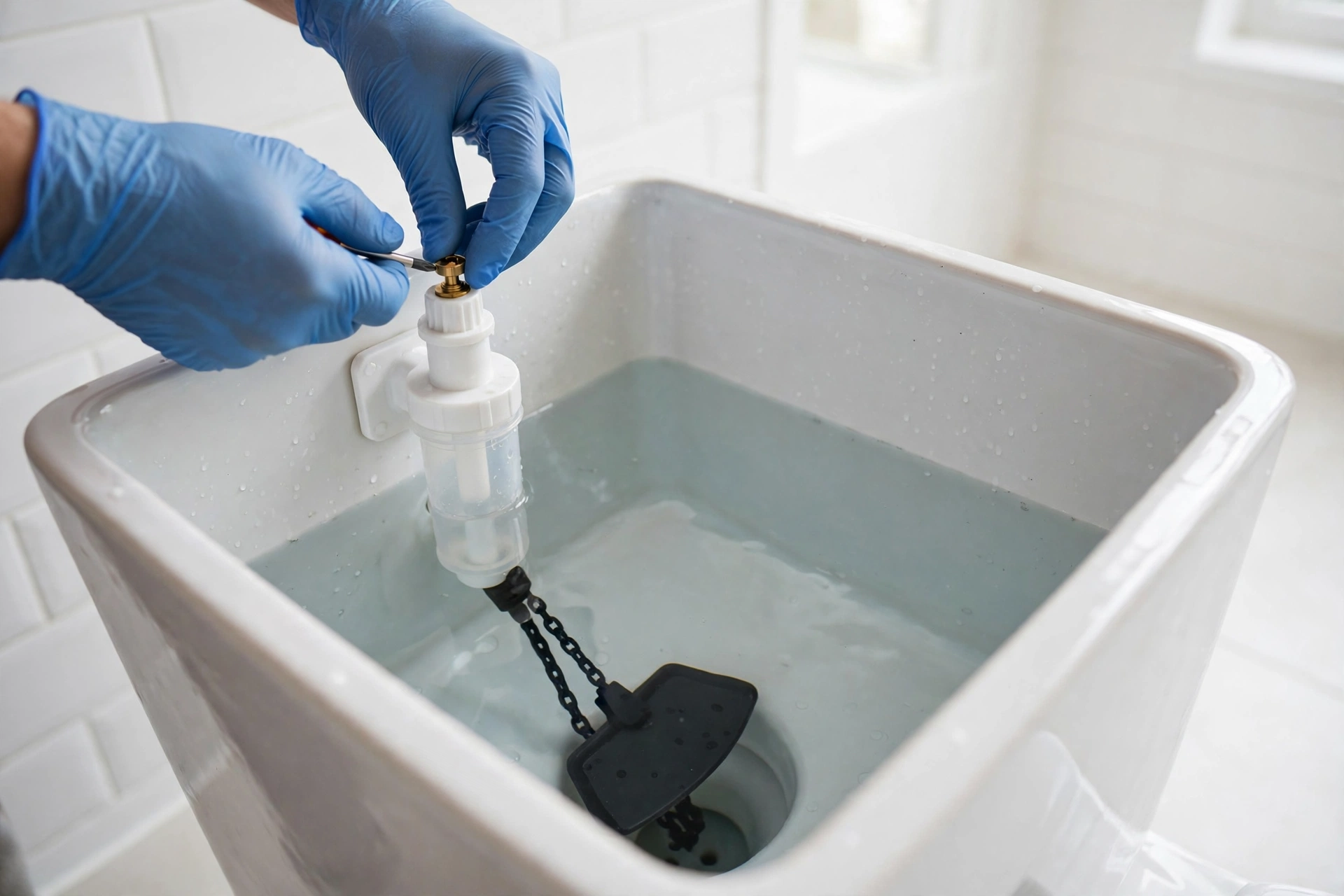
Tank parts — flapper, fill valve, flush valve — are behind most running toilets.
What a Leaking Toilet Looks Like
A leaking toilet shows water outside the fixture. The usual spots are the base where the toilet meets the floor, the supply line and shut-off valve behind the toilet, and the joint where the tank meets the bowl. You might see a puddle after flushing, a floor that never fully dries, a musty smell near the base, or discoloration around the toilet. In a home with a bathroom over another room, a leak can show up as a damp patch on the ceiling below.
Leaks come from different parts than running toilets. A failed wax ring is the most common: the seal between the toilet and the drain loses its shape, and flush water escapes at the base. A cracked flange, or one sitting at the wrong height, can cause the same symptom even with a new wax ring. A supply line or connection can drip slowly. A tank-to-bowl gasket can let tank water seep down the back of the toilet. And a rocking toilet can break a wax seal over time, which is why movement and leaking so often show up together.
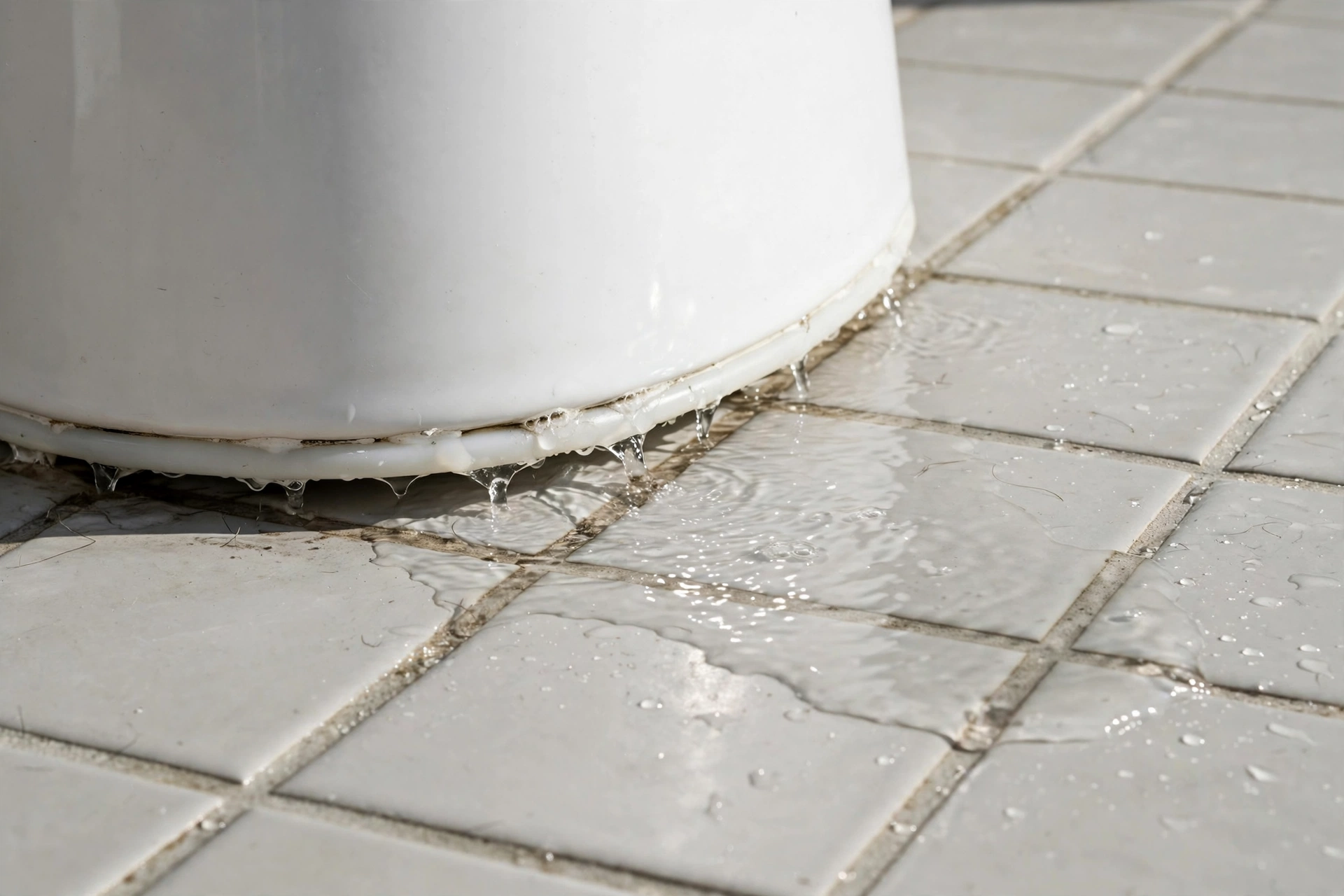
Water at the base after flushing often points to the wax ring or the flange.
How to Tell Which One You Have
Start with the floor. If the floor around the toilet is dry and the only symptom is sound or refilling, the problem is most likely a running toilet. If there is water on the floor, a damp spot, or a smell near the base, treat it as a leak — even if the toilet also runs. When both are happening, say so when you call; it changes what the provider checks first.
Then watch when the symptom shows up. A running toilet usually acts up on its own, between flushes. A base leak often appears right after a flush, when water passes through the seal. A supply-line drip may be steady and have nothing to do with flushing. A tank-to-bowl leak may show as water on the floor behind the toilet after the tank fills. Noticing the timing makes your description much more useful.
You can also check the tank without any tools. Lift the tank lid carefully and set it somewhere safe — it is heavy and can crack if it falls. The water level should sit below the top of the overflow tube. Watch whether water is trickling into the overflow tube, and whether the flapper looks warped or coated. Do not take parts apart or adjust anything you are unsure about. Describing what you see is enough.
What to Check Safely
- Is the floor wet, damp, or dry around the base?
- Does the toilet run or refill between flushes?
- Does water appear only after a flush, or all the time?
- Does the toilet rock or move when used?
- Is there a drip behind the toilet near the supply line or shut-off valve?
If water is leaking, stop using that toilet if you can, avoid flushing again, and turn the shut-off valve behind the toilet clockwise if you can reach it safely. Keep towels or a bucket nearby, and keep water away from electrical outlets and appliances. If the toilet is only running, you can keep using it while you arrange help — but the sooner it is checked, the less water goes to waste.
When to Call
Call promptly for any leak, because water damage grows with time. Call promptly too if the toilet runs constantly, if it is the only toilet in the home, or if you notice a sewage odor or wastewater coming up into the bowl. When you call Toilet Fix Pros, describe whether the problem is running, leaking, or both, and whether water is on the floor. We connect you with an independent local provider who checks the toilet in person, explains what they find, and carries out the work you approve. The provider performs the work and sets any pricing.
In Bowie's Belair-era neighborhoods — Meadowbrook, Buckingham, Kenilworth, Tulip Grove — many bathrooms still have fixtures that have been in service for years, so worn flappers, tired fill valves, and flattened wax rings are a common sight. Whatever the age of the toilet, a clear description of what you see and hear is what gets the right fix started.
Frequently Asked Questions
Can a running toilet turn into a leaking toilet?
It can. A running toilet does not itself leak onto the floor, but the same worn parts, age, and movement that cause running can also weaken seals. A rocking toilet, for example, can break a wax ring and start leaking at the base.
Is a running toilet an emergency?
A running toilet is usually not an emergency the way an active leak is, but it should not be ignored. It wastes water continuously and can mask a second problem. If the toilet runs nonstop or is the only toilet in the home, call promptly.
How do I know if the wax ring has failed?
The most common sign is water at the base after flushing, often with a musty smell or a toilet that rocks. Only an in-person inspection can confirm it, because a damaged flange or loose toilet can cause the same symptoms.
Need toilet repair in Bowie?
Call Toilet Fix Pros and we will connect you with an independent local provider who may be able to help.
Call to check current availability.