
Toilet Fix Pros Blog • October 2026
What to Do When Your Toilet Overflows
Water on the bathroom floor is the moment to slow down — not to flush again. One more flush pushes more water over the bowl, and an overflowing toilet can soak tile, grout, and the subfloor, and reach the ceiling below, in minutes. The fix is a short sequence: stop flushing, shut off the water if you can reach the valve safely, keep water away from outlets and appliances, contain the spread, and call for help.
An overflowing toilet is stressful, and the first minute matters more than the next hour. Water spreads fast across tile, into grout, under the toilet, and toward the room below. A calm, simple sequence limits the damage and gives the provider a clear picture of what happened.
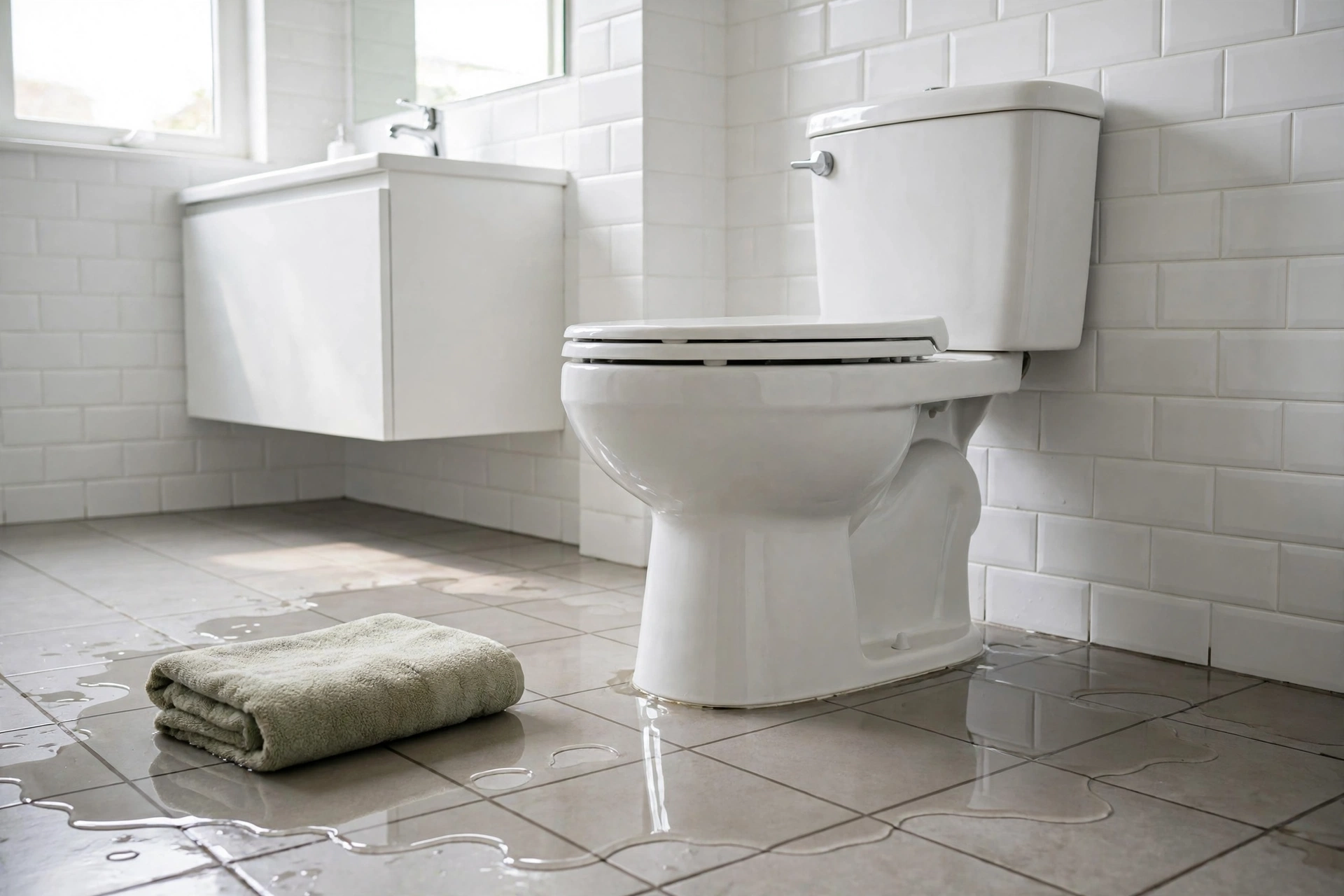
An overflowing toilet: stop flushing first, then shut off the water if you can do so safely.
Step 1: Stop Flushing
Do not flush again. A second flush adds more water to a bowl that is already full and can push more water onto the floor. If someone else is nearby, tell them not to use that toilet. If the bowl keeps rising without anyone flushing, the problem may be a fill valve that will not shut off, or a drain problem backing up from elsewhere. Either way, more flushing makes it worse.
Step 2: Turn Off the Water If You Can Do So Safely
Behind the toilet, near the floor, there is usually a shut-off valve where the supply line meets the wall. Turn it clockwise to stop water flow to the toilet. If you can reach it without stepping through deep water or touching anything electrical, do so. If you cannot reach it safely, skip this step and call for help. Do not reach through standing water to find a valve, and do not touch switches, outlets, or appliances that are wet.
Step 3: Keep Water Away From Electrics
Water and electricity do not mix. If water has reached outlets, switches, power strips, or appliances, stay clear of those areas. Do not unplug wet appliances or touch wet switches. If you can switch off power to the affected room from a dry breaker panel, do so only if you can do it safely and without stepping through water. Otherwise, leave the area and call for help from a safe place.
Step 4: Contain the Water
Use towels, old blankets, or a mop to keep water from spreading to other rooms, down stairs, or into the floor below. A bucket or a large bowl can catch drips from the base. Avoid pushing water toward vents, baseboards, or electrical items. If the floor is slippery, move carefully and keep children and pets out of the wet area.
Step 5: Call for Help
Call Toilet Fix Pros and describe what happened: whether the toilet overflowed when flushed or on its own, whether water is still spreading, whether you turned off the shut-off valve, and whether this is the only toilet in the home. We connect you with an independent local provider who checks the toilet in person, explains what they find, and carries out the work you approve. The provider performs the work and sets any pricing.
What NOT to Do
- Do not keep flushing to try to clear the overflow.
- Do not pour chemicals into a full bowl to try to unclog it.
- Do not take the toilet apart or remove the tank lid if you are unsure how it fits back.
- Do not step through standing water near outlets or appliances.
- Do not use a wet vacuum on water near electrical items unless you know it is safe.
Chemicals are a particular risk in an overflowing toilet. They can splash, damage surfaces, and make the water harder for a provider to work with. A plunger can help a simple clog, but only if the bowl is not about to overflow and you can use it without splashing. If you are unsure, wait for the provider.
What Happens When You Call
When you call, you describe the problem in your own words. We connect you with an independent local provider who checks the toilet in person — tank, base, supply line, and drain — to find the cause. Common causes of an overflow include a blocked trap or drain, a fill valve that will not shut off, and wastewater backing up from elsewhere. The provider explains what they can do and any cost involved, and work proceeds only with your approval.
After the immediate problem is handled, the provider can also check for related issues, such as a wax ring that was stressed by the overflow or a toilet that rocks. Mention anything else you noticed, even if it seemed small: a slow flush last week, a toilet that ran at night, or a damp spot near the base. Those details help the provider understand whether the overflow was a one-time clog or a sign of a wider problem.
After the Water Is Cleaned Up
Once the toilet is working again, keep an eye on the area for a few days. Check the floor around the base after flushing, look for dampness or a musty smell, and note whether the flush is back to normal. If the toilet starts running, rocking, or clogging again soon after, call back and describe the new symptom. Early attention keeps a small problem from becoming a second overflow.
Frequently Asked Questions
Should I try to plunge an overflowing toilet?
Only if the bowl is not about to spill over and you can plunge without splashing. If the bowl is full, the water is still rising, or you are unsure, do not plunge. Stop flushing, turn off the shut-off valve if safe, and call for help.
Can I use the other toilet in the home?
Often yes, if the overflow was caused by a clog in that one toilet. If wastewater is backing up into more than one fixture, avoid using any of them until a provider has checked the drain.
What if water went through the ceiling below?
Tell the provider when you call. Water in the ceiling below means the leak has spread beyond the bathroom floor. Avoid the wet area, keep water away from electrics, and let the provider assess the toilet and the extent of the spread.
Need toilet repair in Bowie?
Call Toilet Fix Pros and we will connect you with an independent local provider who may be able to help.
Call to check current availability.